

Imagine you’re hurtling back from the moon at 24,700 miles per hour. Your lunar mission milestones are accomplished. All that’s left is to safely return to Earth. As you hit Earth’s atmosphere, you watch a fireball of glowing plasma outside your window, blazing at 5,000 degrees.
How do you survive this re-entry without burning up like a marshmallow dropped in a bonfire?
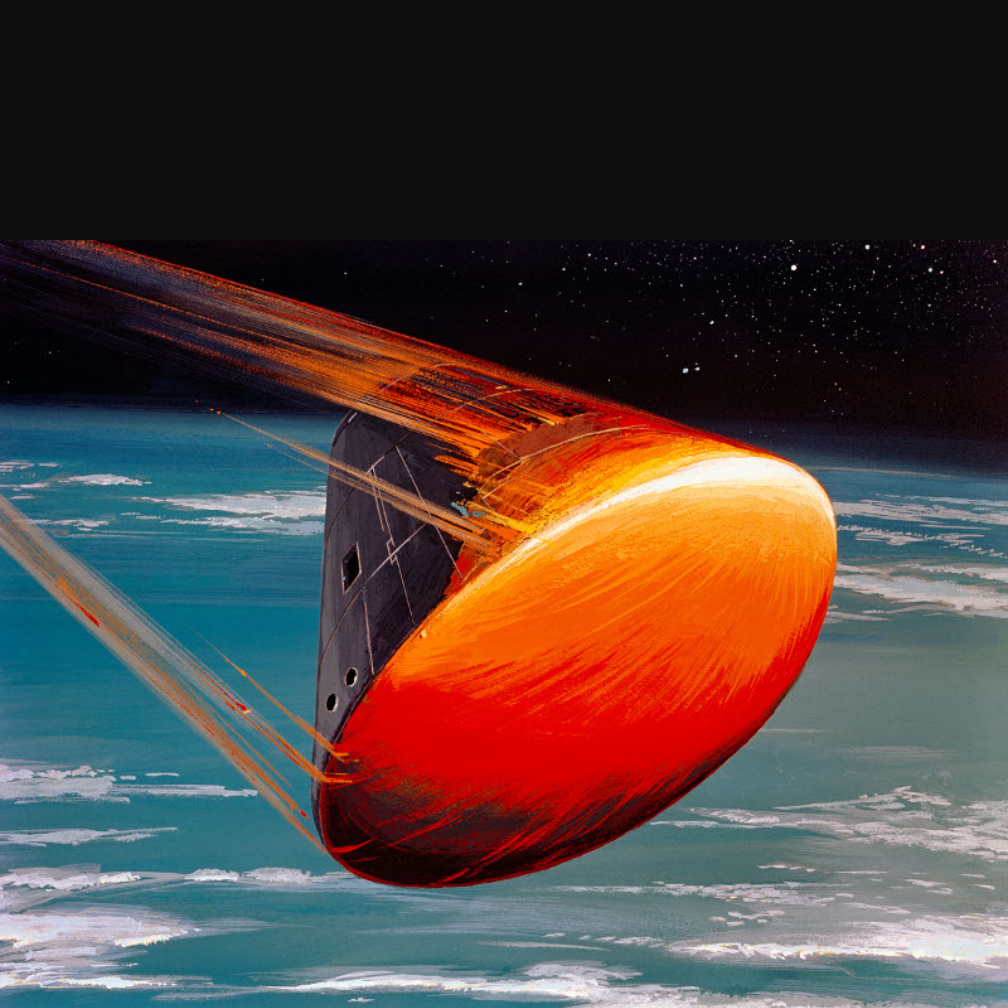
NASA had to solve this problem for survivable space travel. Today, right here in the Smithsonian National Air and Space Museum, you can stand inches away from the ingenious solution.
Apollo 11’s command module Columbia shows her scars and scorch marks in a glowing glass box. The honeycomb matrix along the bottom contains a hand-filled ablative compound designed to burn and char. The char layer becomes an incredible insulator, protecting the material underneath.
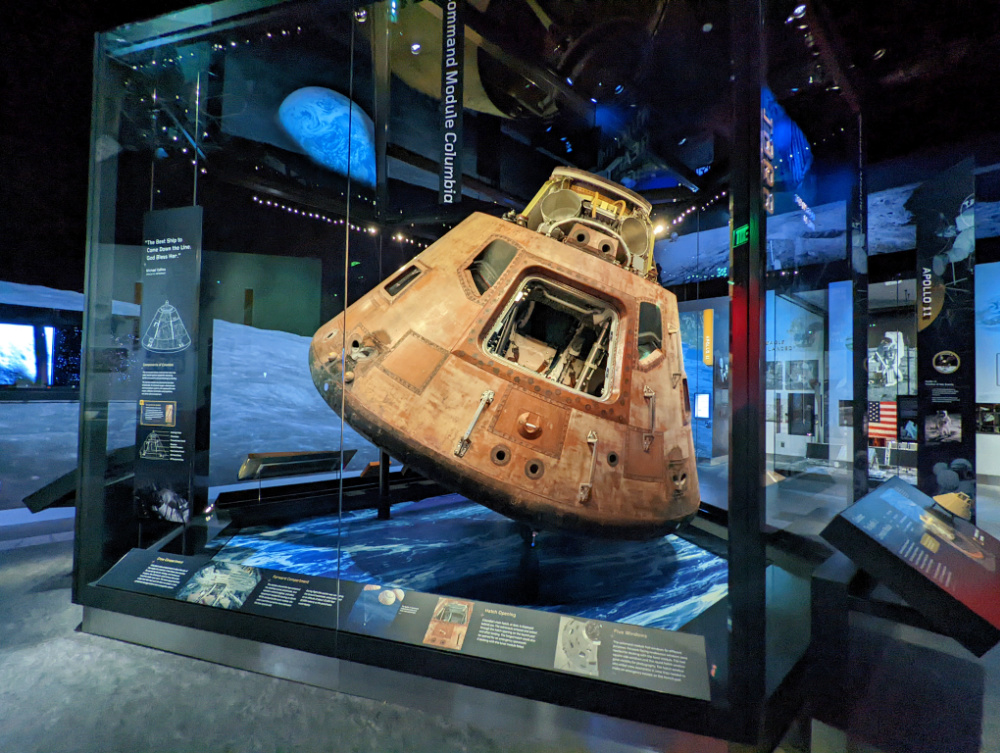
Columbia didn’t just survive the hottest, fastest trip imaginable; it was engineered to. Ingenuity turned an impossible problem into one of the greatest success stories in history.
And it brought Neil Armstrong, Buzz Aldrin, and Michael Collins safely back to planet Earth and to their families.
See Columbia in “Destination Moon”, Gallery 206, 2nd floor of the Smithsonian Air and Space Museum.
Free passes are required. Reserve yours here.
Interested in more DC stories and places to take your homeschool family to? Subscribe to our weekly newsletter!


